
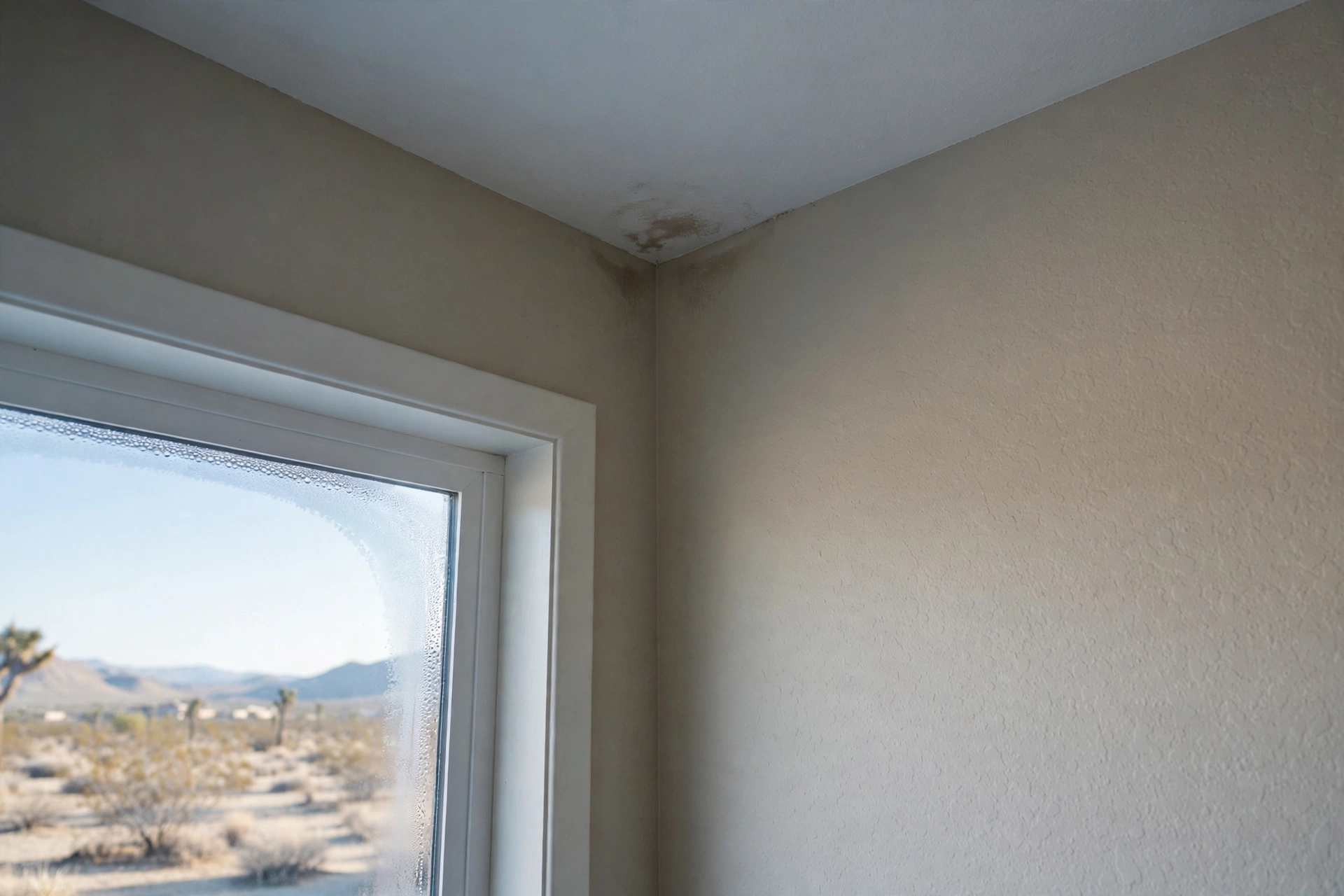
Why Lancaster homes get this question
Lancaster sits in the high desert, where days and nights behave very differently. A roof deck that bakes in the afternoon sun can turn cold overnight, while showers, cooking and evaporative coolers add moisture to the air inside. When that warm, moist air meets a cold surface — a ceiling, a window frame, the underside of the roof — water can condense there, just as it does on a cold glass. The result is a damp patch that looks like a leak, even with no rain at all.
So the first step is not to assume the roof has failed. Note when the moisture appears, where it appears, and what it looks like — those three notes will help any provider narrow down the cause.
Timing is the strongest clue
Ask yourself one question first: does the moisture follow the weather, or the household?
If a stain appears during or shortly after rain — especially wind-driven rain — a roof problem is the more likely direction. Water can travel along framing before it shows, so the stain may appear hours after the rain stops and some distance from the entry point — see our guide to sudden ceiling leaks in high-desert homes.
If the moisture appears on dry, cold mornings and fades by the afternoon, condensation is the more likely direction. The same applies if it shows up only on the coldest nights of the year. And if dampness appears only while an evaporative cooler runs on a dry day, the cooler may be involved — see swamp cooler leaks vs. roof leaks.
Timing is a clue, not a diagnosis — treat what you observe as evidence to pass on, not a conclusion.
Where the moisture shows up matters
Condensation tends to appear where warm indoor air meets the coldest surfaces: around windows and skylight frames, in ceiling corners, and on bathroom and kitchen ceilings. Fogged windows in the same room support that explanation.
Roof leaks more often appear below a specific weak point: under a valley, below flashing around a chimney or vent, or beneath a roof penetration. Flashing problems are a common example in Lancaster. If the same spot gets worse after every storm and stays dry between storms, that points toward the roof.
Location can also mislead: water runs downhill inside a roof before it drips, so the stain may sit well away from the entry point.
What the stain itself can suggest
A condensation mark is often light and diffuse, with soft edges, and it may come and go with the weather. You might also notice a musty smell if the dampness keeps returning.
A roof-leak stain more often has a defined edge, sometimes with a brownish ring, and it tends to grow after storms. An active drip, bubbling paint, or sagging drywall is a sign to act promptly — arrange an assessment and protect belongings below the area.
Safe checks you can do from inside the house
| Observation | What to note |
|---|---|
| When it appears | Rain, cold mornings, cooler use, or all three |
| Whether it dries out | Fades by afternoon, or stays and grows |
| Windows in the same room | Fog or condensation at the same time |
| Change after a storm | Bigger, darker, or dripping |
Take dated photos so you can show whether the stain is growing, and note the weather and what was running in the house. Do not climb onto the roof or into the attic — that is work for a professional with safe access. Keep up a regular roof inspection, especially before winter — see our pre-winter checklist for Lancaster.
What to tell the provider
When you arrange an assessment, pass on the pattern you recorded: when the moisture appears, what the weather was doing, whether windows fog at the same time, and whether a cooler was running. Mention the roof type and age if you know them.
For help discussing the next step, call (661) 527-8933. Roof Leak Repair Lancaster is a referral service, not the contractor performing the work. Ask who will inspect your property, whether a visit has a fee, and when that provider is available. Diagnosis, pricing, scheduling, and any repair agreement must be confirmed with the independent provider. Homeowners in Quartz Hill and West Lancaster can use the same process — the climate clues are similar across the Antelope Valley.
Frequently asked questions
Can condensation damage a ceiling the way a leak can?
Yes, over time. Repeated dampness can stain and soften plaster and paint and encourage mould growth, even when the roof is sound — the fix may be ventilation or moisture control rather than a roof repair.
Should I wait to see if the stain dries out?
Watching the pattern for a few days is useful, but do not ignore a stain that is growing, darkening, or actively dripping — arrange an assessment rather than waiting for a bigger repair.
Continue exploring
Sources & further reading
Reviewed November 5, 2026. Confirm current provider availability and any inspection fee before booking.